
What do PHEV, MHEV, HEV and BEV mean? Car abbreviations explained for short lease
You're browsing the short lease range and come across terms like PHEV, BEV, HEV and MHEV. For people who work with cars every day, these are self-evident terms. For anyone who simply wants a suitable short lease car, it's a jumble of letters. In this article we explain each abbreviation clearly and tell you what your choice means for your company car tax and monthly costs.

What does PHEV mean?
PHEV stands for Plug-in Hybrid Electric Vehicle, or plug-in hybrid. This is a hybrid car that you can charge at a charging point as well as fill up at the pump. The battery is larger than in other hybrids, so you can drive a good number of kilometres purely on electric power. The Volkswagen Tiguan, for example, has an electric range of up to 129 kilometres.
Do you charge the PHEV regularly and make relatively short trips? Then it drives electric much of the time, resulting in low fuel costs. Do you cover a lot of long distances and barely charge? Then it effectively drives like a somewhat heavier petrol car. Company car tax for a PHEV is 22% in 2026, the same as a regular petrol car. So the advantage isn't in the tax rate, but in the potentially lower fuel costs for those who charge regularly.
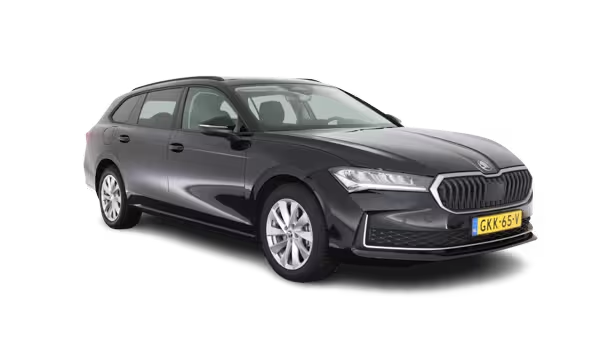
More examples of PHEVs in our short lease range: the Ford New Kuga, the Skoda Superb Combi and the Lynk & Co 01.
What does HEV mean?
HEV stands for Hybrid Electric Vehicle, also known as the classic or traditional hybrid. This type became popular thanks to brands such as Toyota and Honda and has been a familiar choice on the lease market for years. An HEV charges itself via the combustion engine and by recovering braking energy. You never have to plug the car into a charging point.
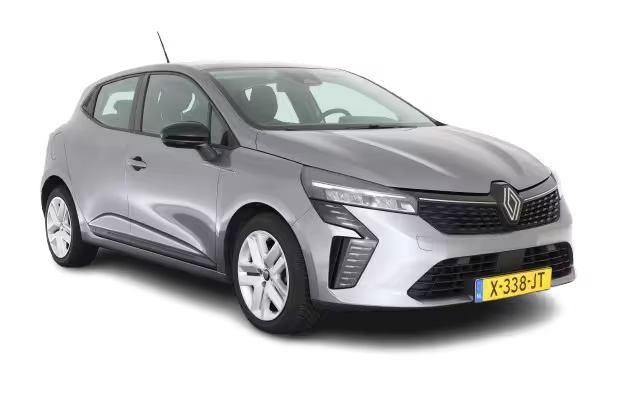
In practice, an HEV drives largely on the electric motor at low speeds and in town. On the motorway, the petrol engine takes over. Fuel consumption is therefore considerably lower than in a regular petrol car, but you never drive fully emission-free. Company car tax for an HEV is 22% in 2026. Well-known examples in our short lease range are the Toyota Yaris and the Renault Clio Hybrid.
What does MHEV mean?
MHEV stands for Mild Hybrid Electric Vehicle, or mild hybrid. This is a light hybrid in which a small electric motor assists the combustion engine when accelerating and braking, but never drives the car on its own. You can't charge an MHEV via a plug.
The system uses less fuel than a regular petrol car, but the effect is more modest than with a full hybrid. For the tax authorities, an MHEV simply counts as a petrol or diesel car: 22% company car tax. The advantage lies purely in lower consumption at the pump. More and more new cars come as standard as a mild hybrid, without you having to do anything for it.
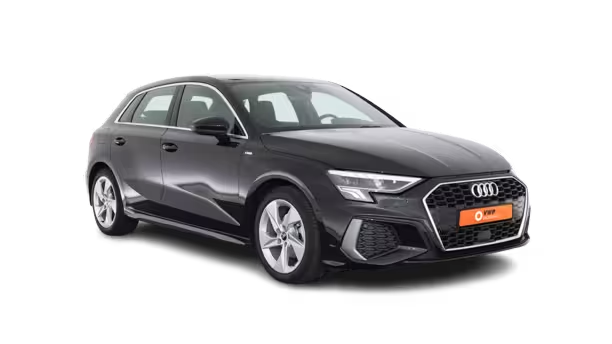
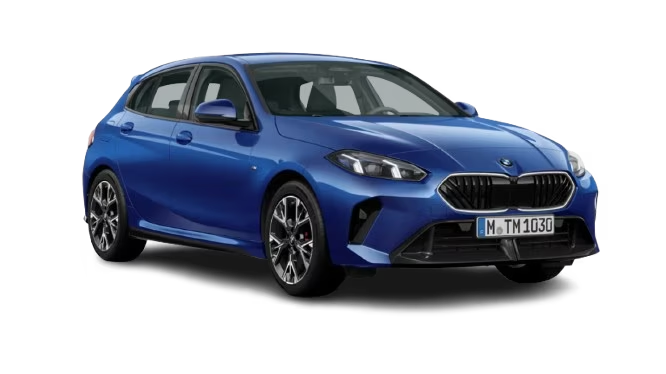
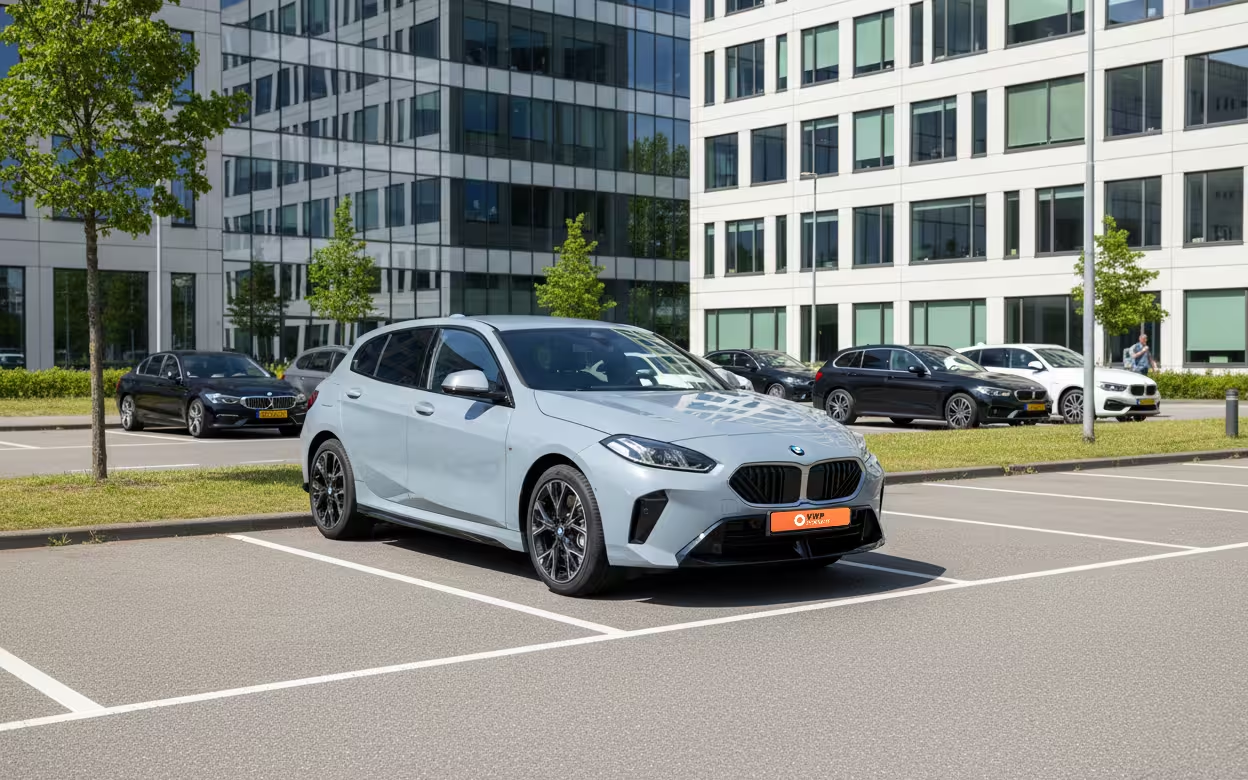
In our short lease range you'll find various MHEVs, such as the Audi A3 Sportback, the BMW New 1 Series and the Ford New Focus Wagon.
What does BEV mean?
BEV stands for Battery Electric Vehicle, or fully electric car. There is no combustion engine. You charge the battery at a charging point at home, at the office or at a fast charger along the way. You never go to the pump.
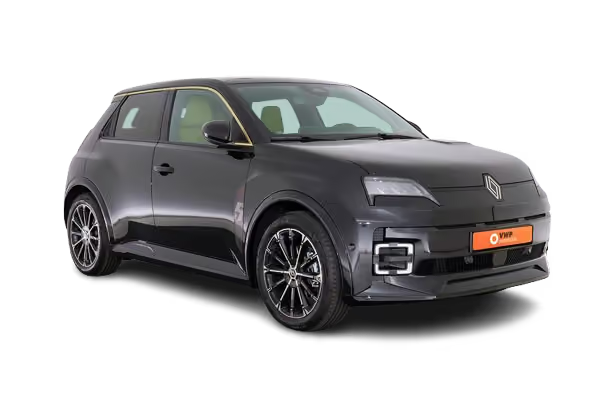
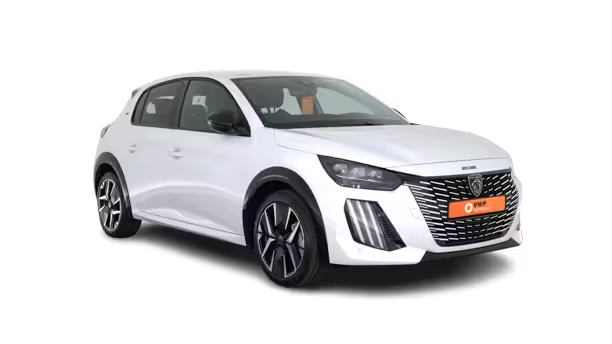
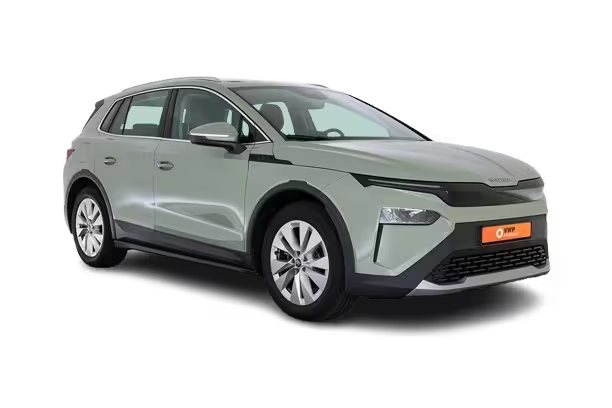
BEVs have the lowest company car tax of all categories: 18% on the first €30,000 of catalogue value in 2026, 22% above that. The range of electric cars is also growing fast. The newest models now reach ranges of up to 900 kilometres on one charge. Not sure whether driving electric fits your daily routine? With an electric short lease car you can test it without a long-term commitment. Take a look at the Renault 5 E-Tech, the Peugeot e-208 or the Skoda Elroq. You can often be driving one the very next day.
Overview: what does the abbreviation mean for your short lease car?
The powertrain determines not only how you drive, but also how much company car tax you pay. Here are the four types at a glance:
PHEV | Plug-in hybrid | Plug needed: Yes | Refuelling: Yes | Company car tax 2026: 22%
HEV | Classic hybrid | Plug needed: No | Refuelling: Yes | Company car tax 2026: 22%
MHEV | Mild hybrid | Plug needed: No | Refuelling: Yes | Company car tax 2026: 22%
BEV | Fully electric | Plug needed: Yes | Refuelling: No | Company car tax 2026: 18% (up to €30k) / 22% above that
There is also the FCEV, or hydrogen car. Well-known models are the Hyundai Nexo and the Toyota Mirai. In the short lease segment this type of powertrain is hardly relevant for now, because of the limited refuelling infrastructure in the Netherlands.
Which powertrain suits your situation?
The abbreviation on the car says something about the technology. But for you as a short lease driver, the question is: which one suits how you drive?
Do you drive a lot in town, make short trips and can you charge at home or at the office? Then a BEV is the cheapest option in the longer term, with the lowest company car tax too. A PHEV is a good middle ground if you sometimes drive long distances and can't always charge.
Don't want a charging point or any hassle, but still want to drive more economically than in a regular petrol car? Then an HEV is the most practical choice. An MHEV is the smallest step: just refuel, slightly lower consumption, no further adjustments needed.
Want to know which cars are available at VWP Shortlease per powertrain type? Take a look at our full short lease range or get in touch for tailored advice.




Related articles

Everything you need to know about an addition in 2026
De bijtellingsregels voor 2026 zijn eindelijk duidelijk. In dit artikel leggen we uit wat er verandert, wat dit betekent voor jouw portemonnee, en hoe je met shortlease slim kunt inspelen op de nieuwe regels voor bijtelling op elektrische, hybride en benzineauto's.

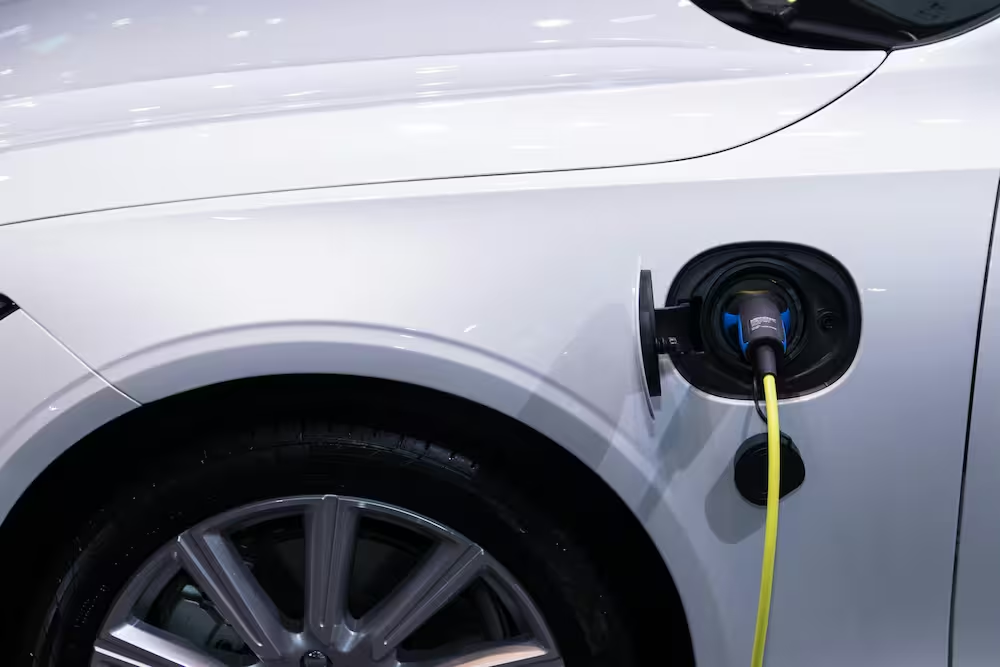
Not sure about electrical? Shortlease as the ultimate test drive
Are you unsure about the switch to electric? A short test drive at the dealer is often not enough to know if it suits you. With a short lease, experience for a few months how loading and range fit into your life.
Company car: all options compared
As an entrepreneur or fleet manager, sooner or later you are faced with the choice: how do we arrange mobility? Do you opt for buying, leasing for the long term, or more flexibility? The “company car” comes in many forms, and each form has its own rules. In this article, we list all the options and explain why flexibility is often the key to success in today's market.